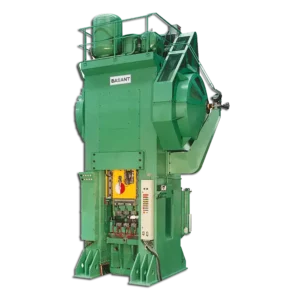
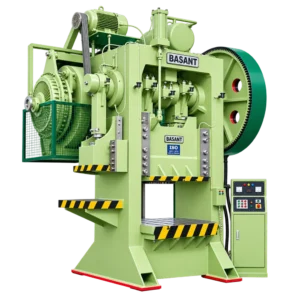
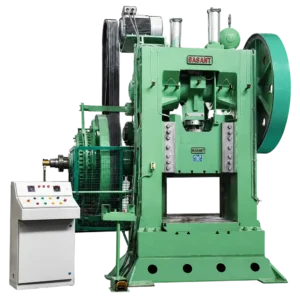
A Pneumatic Power Press uses an air clutch to engage the drive, giving faster response and finer stroke control than a mechanical friction clutch — built in both C-Type and H-Type frames for precision punching at higher tonnages. This 200 Ton pneumatic configuration is built to the dimensions in the specification table on the product page.
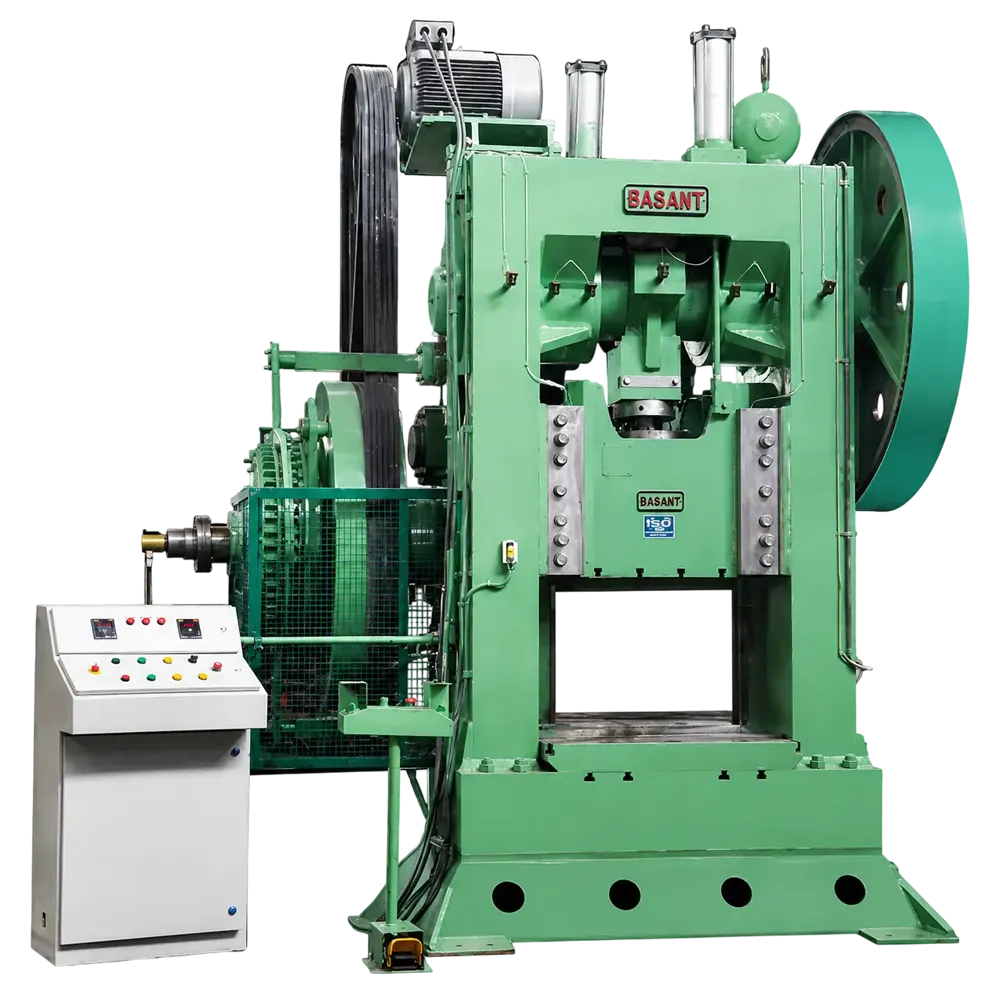
Pneumatic Power Press uses an air-operated clutch to engage the drive instead of a mechanical friction clutch, giving faster response, finer stroke control and lower clutch wear -- built in both C-Type and H-Type frames for precision punching, blanking and forming at higher tonnages.
200 Ton Pneumatic Power Press
200 Ton Pneumatic Pneumatic Power Press — full specification table on the product page.
Technical Specification for 200 Ton Pneumatic Power Press
| Capacity in tons | 200 |
|---|---|
| Table size in mm | 1000x800mm |
| Ram Size in mm | 700x500mm |
| Ram Area in mm | 700x500mm |
| Distance table to RAM | 600mm |
| Stroke Length | 150mm |
| RAM Adjustment | 75mm (Motorised) |
| Shut Height | 450mm |
| Stroke Per Minute | 40 |
| Power Required | 20 HP |
| RPM | 1440 |
Our Pneumatic Power Press Machine is fabricated from heavy-duty steel with a pneumatic friction clutch, motorised ram adjustment and a robust guided ram for consistent, repeatable strokes across long production runs. The air-clutch design allows faster cycling and reduces heat build-up compared to a mechanical clutch at equivalent tonnage.
Ask For PriceFAQ
What is a Pneumatic Power Press used for?
It's used for precision punching, blanking and forming where fast cycle times and fine stroke control matter, typically at 200 tons and above.
What's the advantage of a pneumatic clutch over a mechanical clutch?
A pneumatic (air) clutch engages and disengages faster and generates less heat than a mechanical friction clutch, allowing higher-speed, more repeatable production cycles.
What tonnage range does Basant's Pneumatic Power Press cover?
Roughly 200 to 1000 tons.